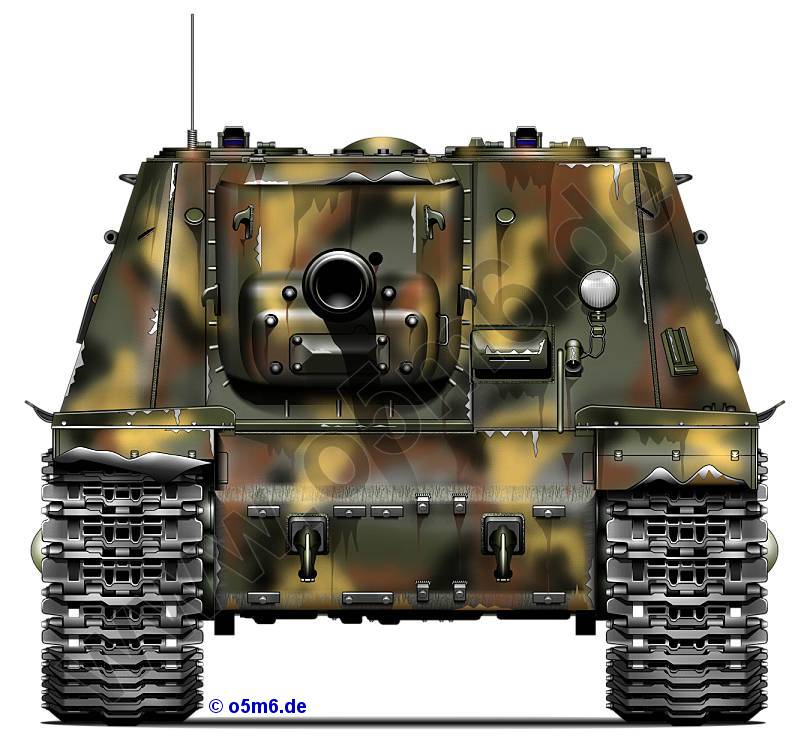
Cast hull front and rare 4-tone camouflage
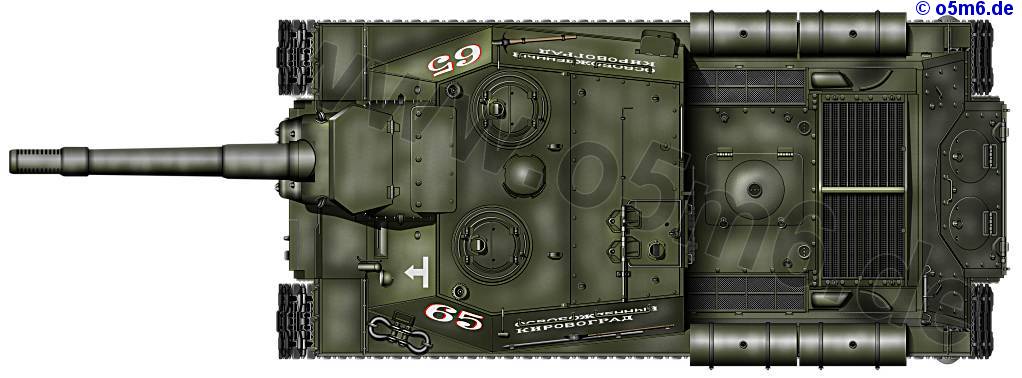
ISU-152 Heavy Self-Propelled Gun
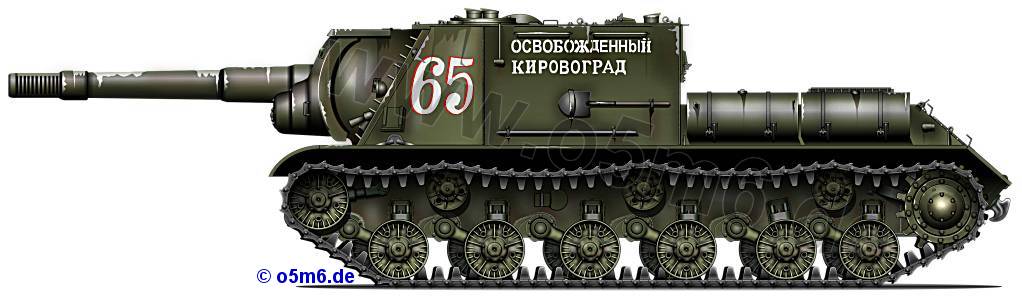
»Liberated Kirovograd«, Koenigsberg, East Prussia, April 1945
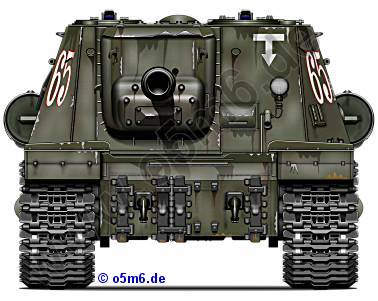
Welded hull front
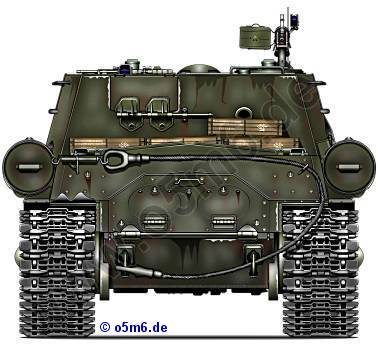
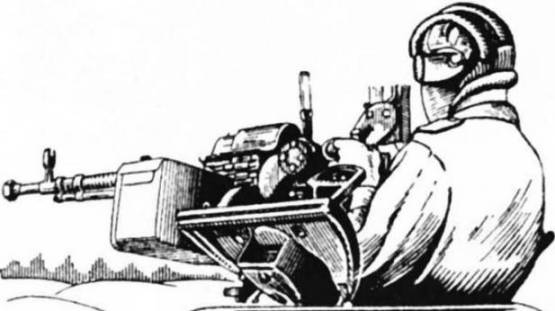
Note ammo boxes on engine deck
ISU-152 Heavy Self-Propelled Gun
With the remarkable success achieved by the SU-152 against the German »Panzer Zoo« during the Kursk salient battle, it comes as no surprise that the design bureaus at »Tankograd« realised the chance of installing the ML-20S howitzer onto the new IS chassis.
The thus created ISU-152 was instantly accepted for series production and the first 35 samples left the production lane before the end of 1943.
Its role was that of providing remote fire support to the advancing breakthrough formations as well as fighting enemy strongpoints and artillery.
Though the ISU proved effective for these purposes, it had its drawbacks in its role as a tank hunter due to its gun's slower muzzle velocity and the equally slow fire rate of 3 rounds per minute. The ISU-122, equipped with the longer 122mm A-19S and D-25S gun resp., showed far better AP (armour-piercing) capabilities, but fell back in terms of HE (high-explosive) efficiency.
During the production process longing far beyond war's end, some improvements were incorporated, as a welded hull front instead of the cast one and the addition of the 12.7mm DShK AA hMG from October 1944 on. Up to the end of the war CHKZ released 2474 ISU-152, with another 100 produced by the Kirovskiy works in reliberated Leningrad.
Together with ISU-122, the ISU-152 made an enormous contribution to the crushing defeat of Nazi Germany.
The thus created ISU-152 was instantly accepted for series production and the first 35 samples left the production lane before the end of 1943.
Its role was that of providing remote fire support to the advancing breakthrough formations as well as fighting enemy strongpoints and artillery.
Though the ISU proved effective for these purposes, it had its drawbacks in its role as a tank hunter due to its gun's slower muzzle velocity and the equally slow fire rate of 3 rounds per minute. The ISU-122, equipped with the longer 122mm A-19S and D-25S gun resp., showed far better AP (armour-piercing) capabilities, but fell back in terms of HE (high-explosive) efficiency.
During the production process longing far beyond war's end, some improvements were incorporated, as a welded hull front instead of the cast one and the addition of the 12.7mm DShK AA hMG from October 1944 on. Up to the end of the war CHKZ released 2474 ISU-152, with another 100 produced by the Kirovskiy works in reliberated Leningrad.
Together with ISU-122, the ISU-152 made an enormous contribution to the crushing defeat of Nazi Germany.
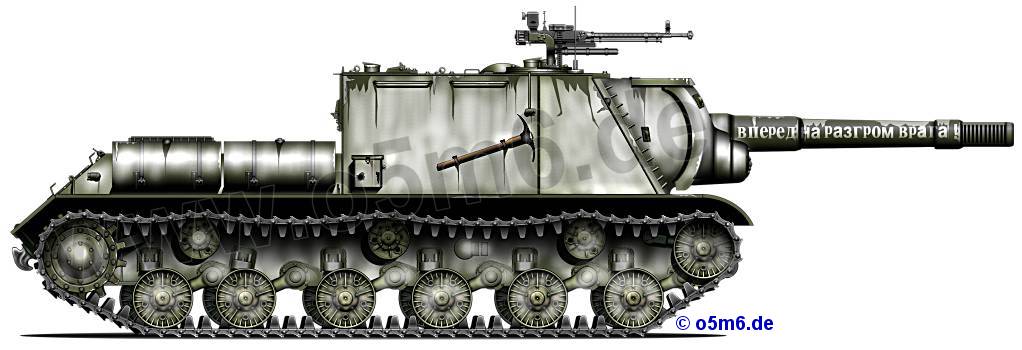
»Forward to the destruction of the enemy«, common slogan combined with the equally common winther whitewash
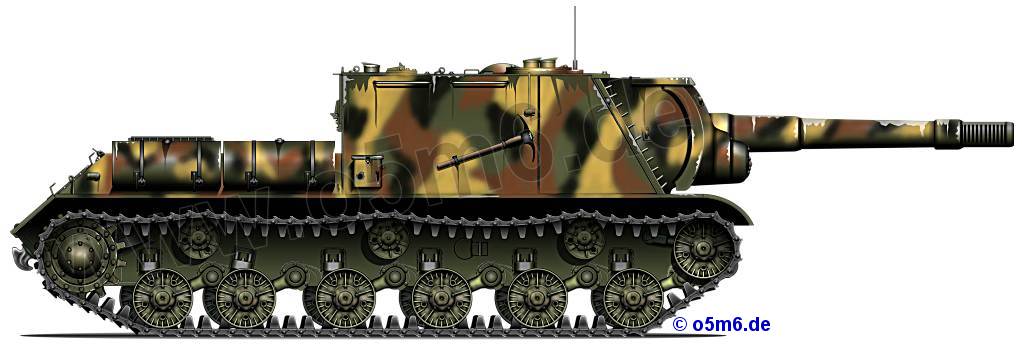
4-tone camouflage as seen during the Lvov-Sandomierz operation, July-August 1944
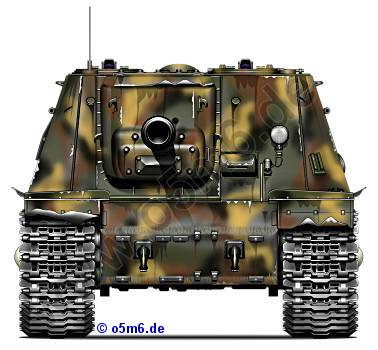
Late cast hull front
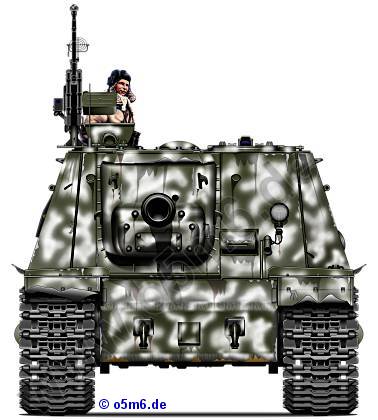
Early cast hull front
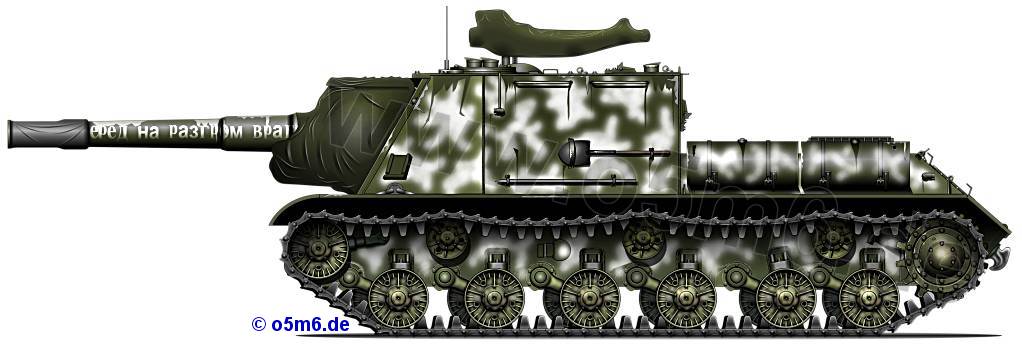
Amobe winter camouflage, East Prussia, January 1945
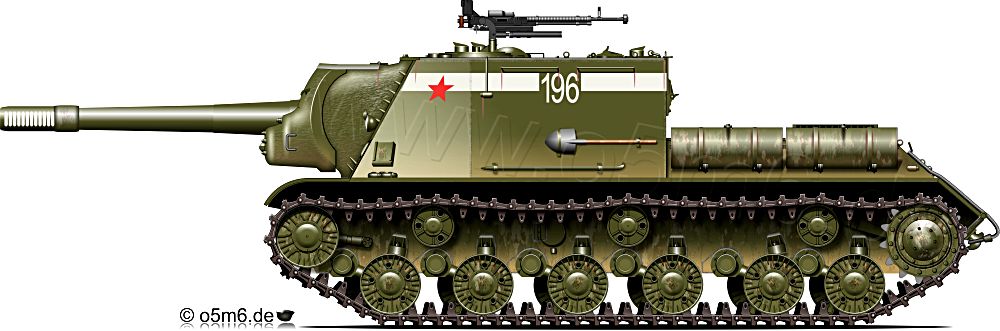
Berlin, April 1945
All drawings © o5m6.de .All rights reserved.
No publication in any form without the author's written permission.
Last Updated: February 22, 2014
No publication in any form without the author's written permission.
Last Updated: February 22, 2014