PT-34 Mine Roller Tank
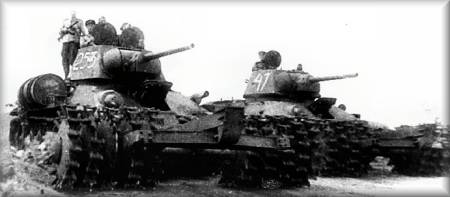
PT-34 Mine Roller Tank
In the wake of the fiasco in Finland, the Red Army laid down requirements for a mine-clearing vehicle based on a tank, which would permit engineer units to clear heavily protected minefields from within a tank without exposing themselves to fire.
It was to be designed to withstand the blast of heavy antitank mines.
A team was formed under P. M. Mugalev at the Dormashina Factory in Nikolayev.
In 1940, a prototype, using a T-28 tank was completed, but no production ensued, probably because of problems uncovered during testing.
Further work was interrupted by the outbreak of war, but in 1942, Mugalev began investigating a new design for various sizes of tanks, including the T-60, KV and T-34.
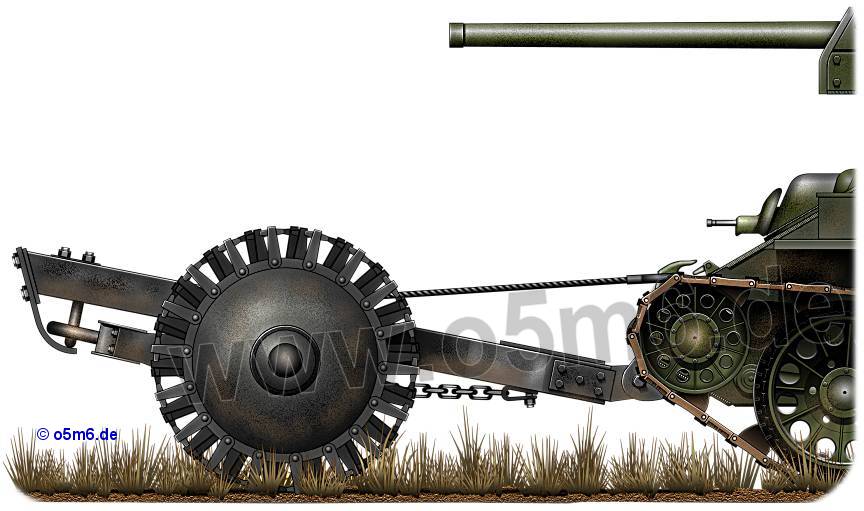
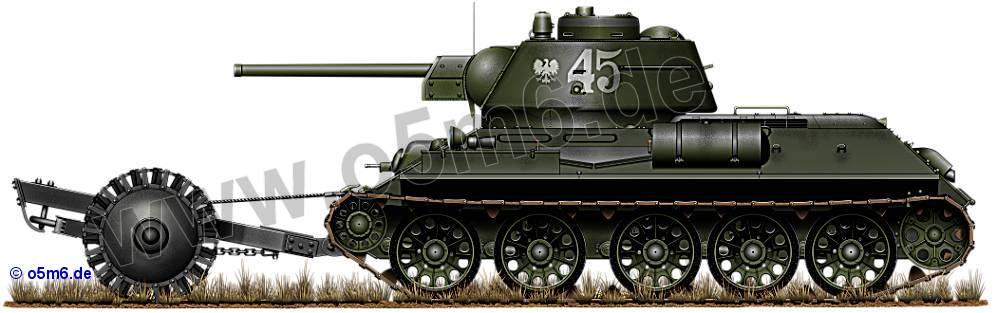
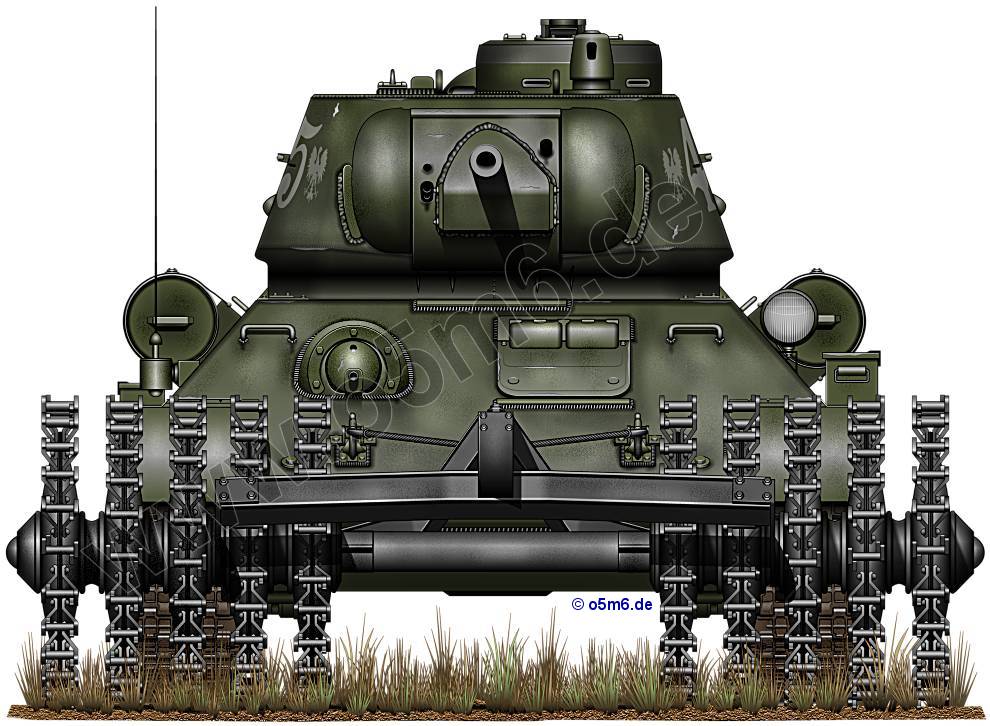
The new unit consisted of a fork on a multi-wheeled axle.
Each wheel consisted of a solid centre disc with H-beam girders radiating outwards like a starfish.
The whole unit was quite heavy, and on contact with a mine would detonate it, losing an arm or two in the process.
Production versions used large cast wheels.
Because of the detrimental effect on the clutch and transmission, only the T-34 was adjudged suitable for the role.
A trawl could withstand from eight to ten detonations of 5-10kg anti-tank mines.
It was to be designed to withstand the blast of heavy antitank mines.
A team was formed under P. M. Mugalev at the Dormashina Factory in Nikolayev.
In 1940, a prototype, using a T-28 tank was completed, but no production ensued, probably because of problems uncovered during testing.
Further work was interrupted by the outbreak of war, but in 1942, Mugalev began investigating a new design for various sizes of tanks, including the T-60, KV and T-34.
The new unit consisted of a fork on a multi-wheeled axle.
Each wheel consisted of a solid centre disc with H-beam girders radiating outwards like a starfish.
The whole unit was quite heavy, and on contact with a mine would detonate it, losing an arm or two in the process.
Production versions used large cast wheels.
Because of the detrimental effect on the clutch and transmission, only the T-34 was adjudged suitable for the role.
A trawl could withstand from eight to ten detonations of 5-10kg anti-tank mines.
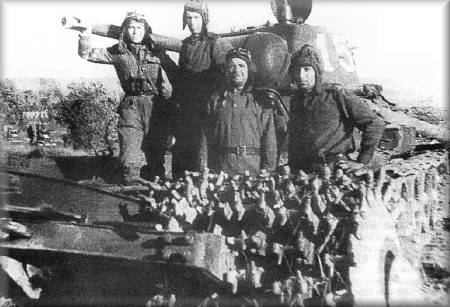
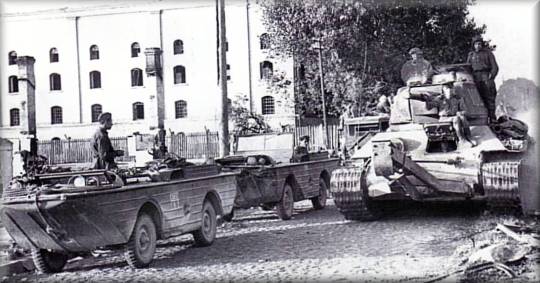
The first mine-rolling detachments were formed in May 1942. They were used throughout the war, and several vehicles were handed over to the allied Polish LWP units as well.
Source : S.Zaloga, J.Grandsen, Soviet Tanks and Combat Vehicles of World War Two.

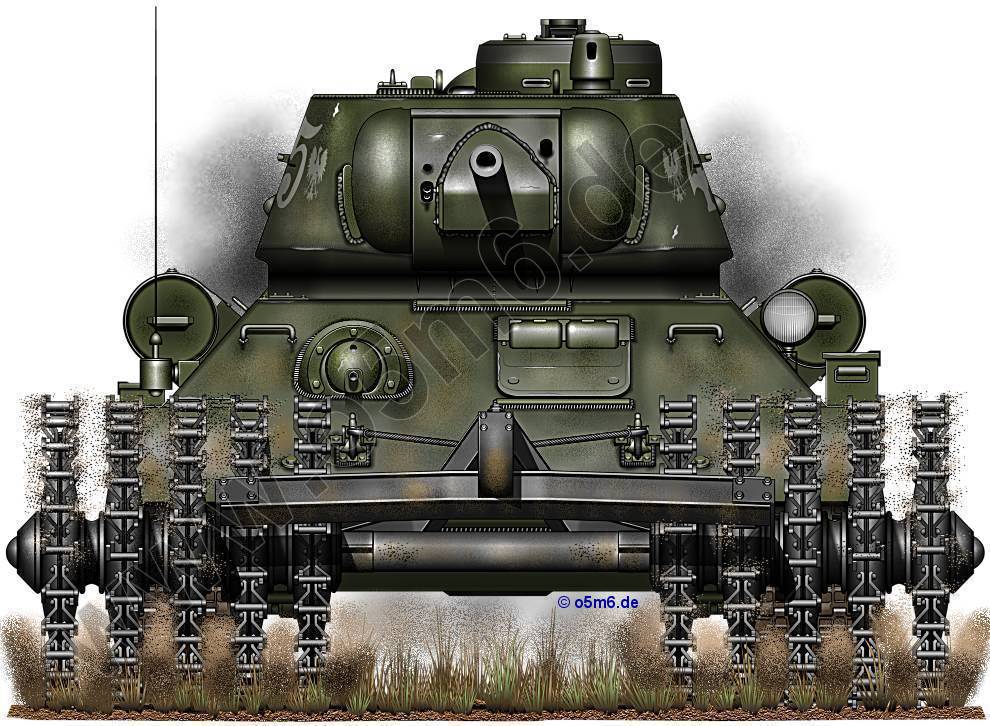
All drawings © o5m6.de .All rights reserved.
No publication in any form without the author's written permission.
Last Updated: July 01, 2007
No publication in any form without the author's written permission.
Last Updated: July 01, 2007