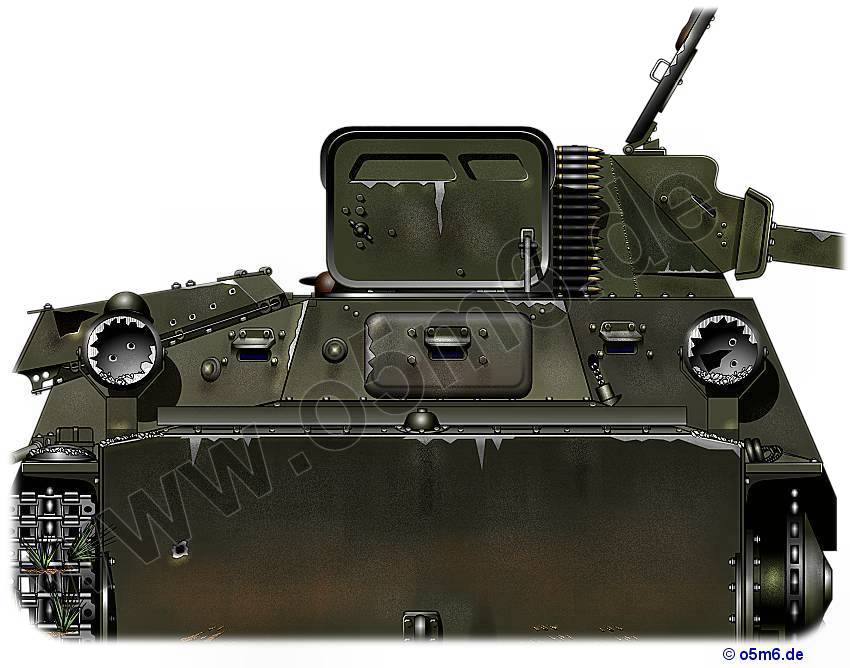
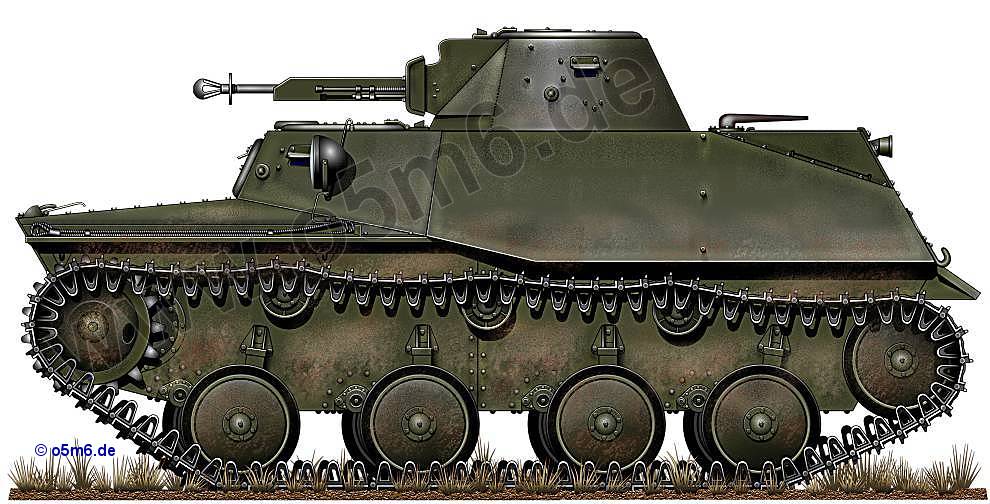
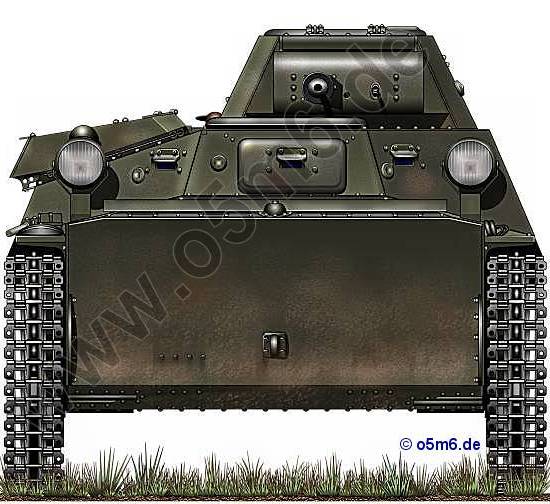
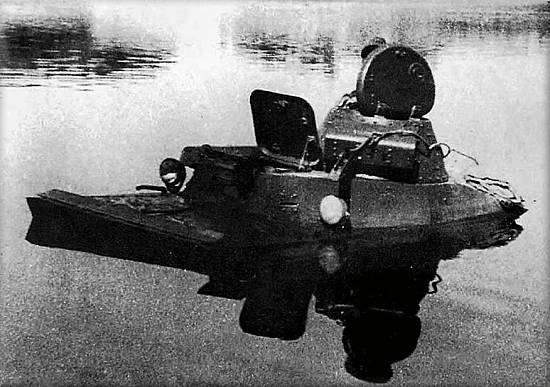
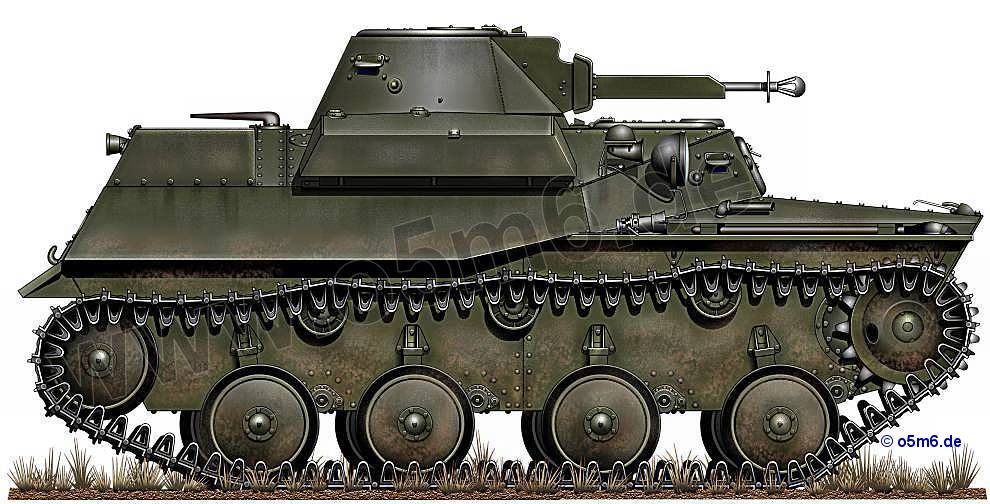
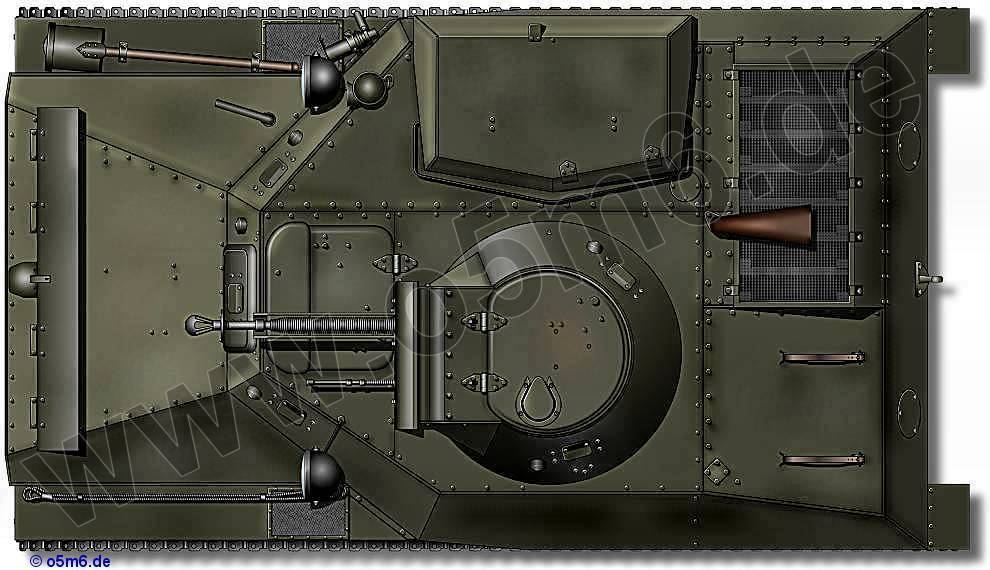
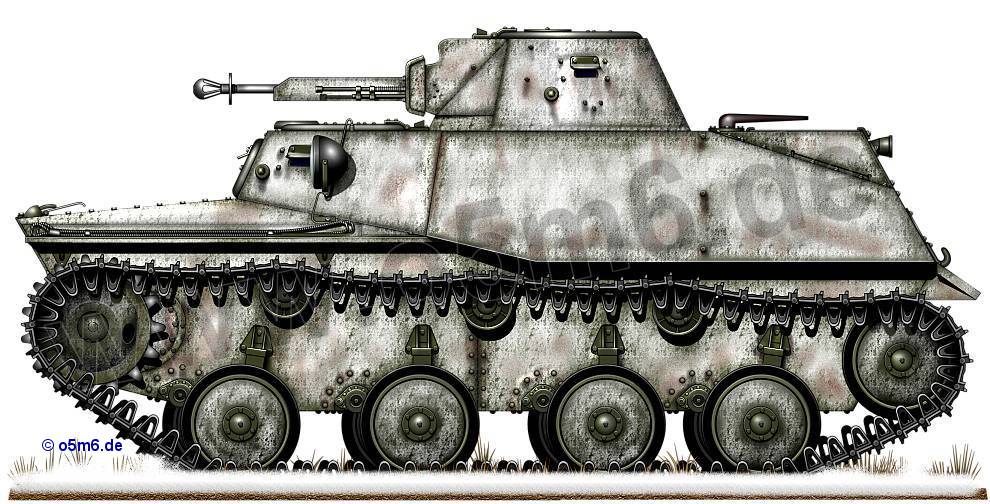
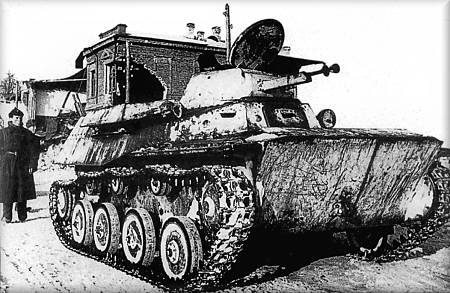
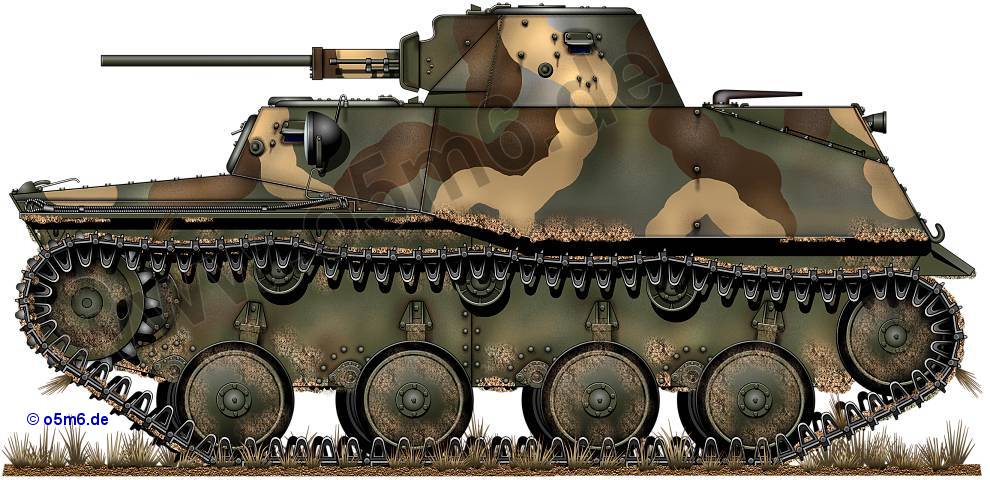
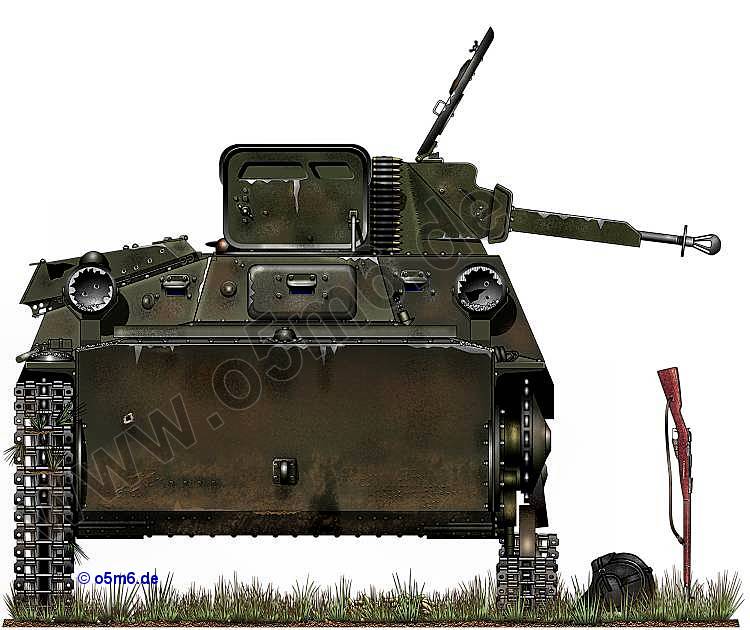
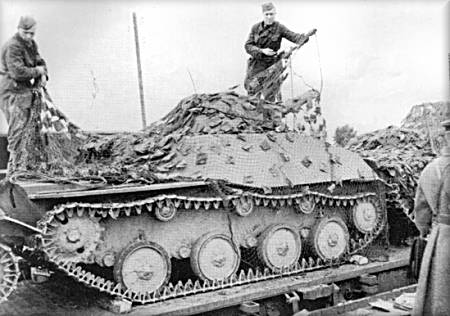
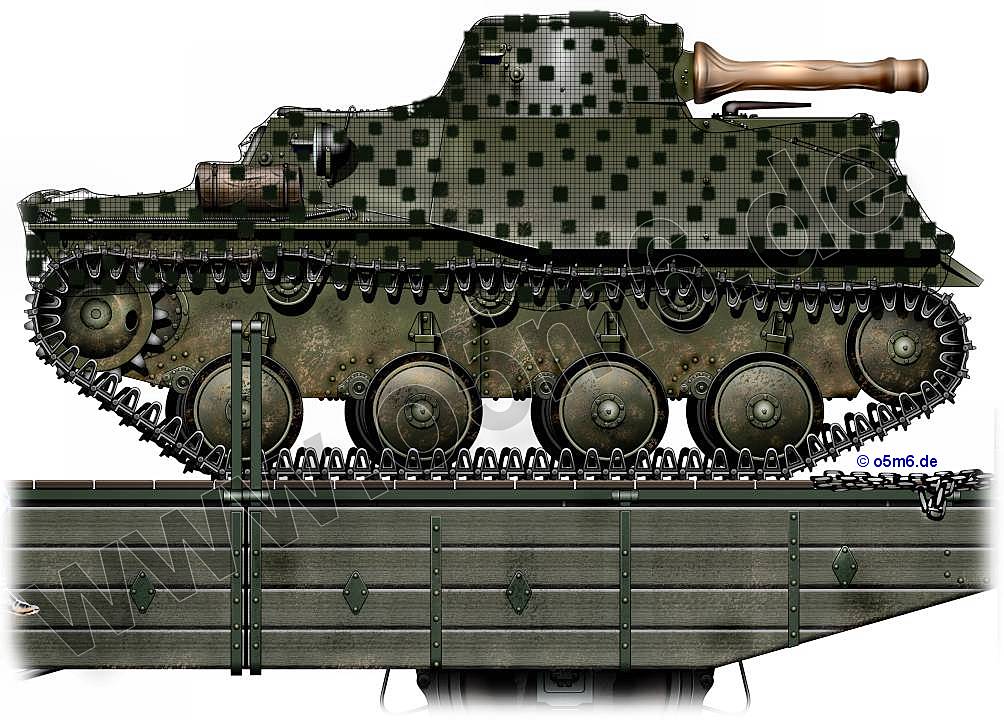
The new hull and chassis were developed before the turret. The crew consisted of two men: a driver (located in the front of the hull) and a commander (in the turret). The design of the new vehicle allowed access to the engine from inside the vehicle once an armored partition was removed. The transmission was in the front of the vehicle as in the T-38. At the rear there were two fuel tanks of 100 liters each. The tank had a screw propeller and two rudders with armor protection to protect them from damage (from bullets, shell fragments and so). Additional steps were made to improve the amphibious ability of the tank; the silhouette was improved, a special water deflector had been added, and all hatches were hermetically sealed. All of this allowed the T-40 to cross rivers with strong currents as well as through choppy seas (up to sea force 3). However, to be on the safe side, the crew was equipped with lifebelts.
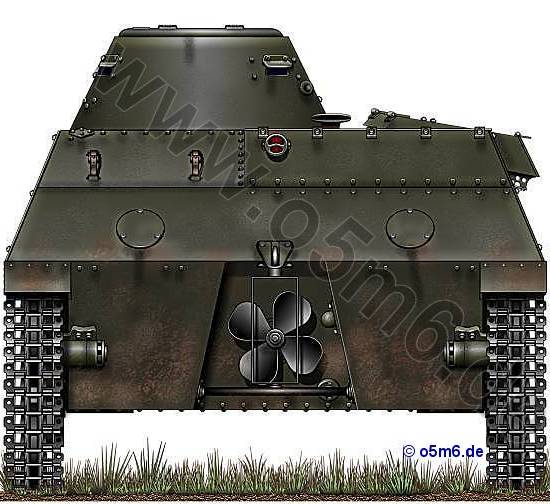
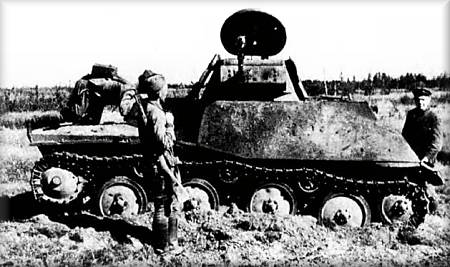
The commander had three periscopic sights, and the driver had two. To navigate on water, in fog, and at night, the vehicle was equipped with a magnetic compass from the Moscow factory "Aviapribor." There was a 71-TK-3 radio (range 16 km) which was installed to the right of the commander's position.
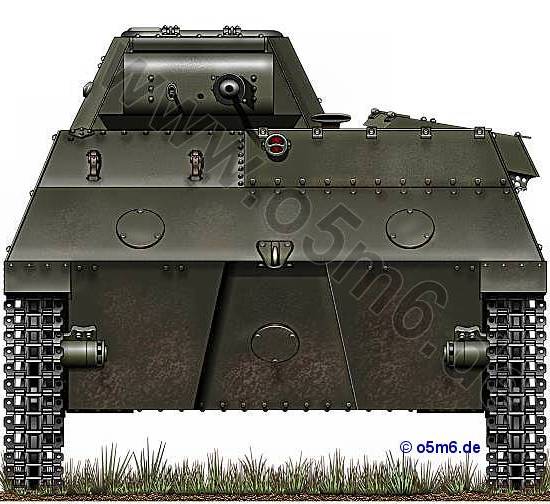
Upon GKO's #443ss decree of 19 December 1939, the new tank was accepted into service. In the summer of 1940, G.K. Zhukov (Chief of the Soviet General Staff) and S.K. Tymoshenko (Soviet Minister of Defense) inspected factory #37. Zhukov was especially interested in the T-40 light tank, and the capabilities of factory #37 in general. He ordered the refit of some facilities to improve their output. After an extensive refit of Moscow factory #37, and the setup of the newest technology and machine tools, the mass production of the T-40 was begun in October 1940. By the end of that year, the factory planned to produce 100 T-40 tanks, but had finished only 37. In 1941, production had been increased, and by 22 June 1941, the factory had produced another 179 tanks.
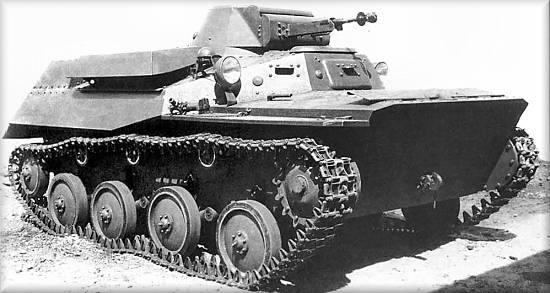
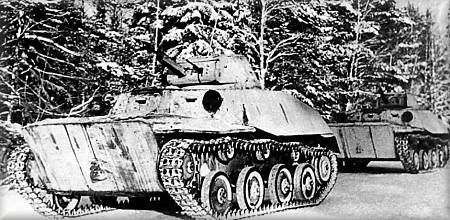
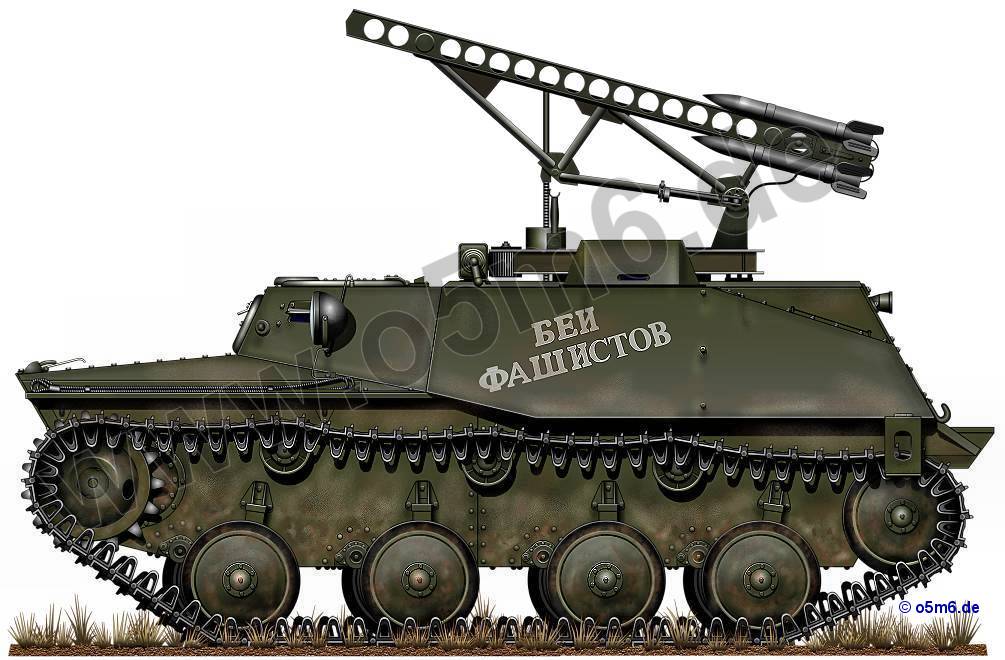
The Red Army's need of tanks was so great that even weak tanks were needed badly. To increase the output of T-40's, the factory simplified construction of the vehicle. First of all, all the amphibious features and radio were removed. In July, 60 modernised tanks were built. According to archival documents, those tanks had the same name, but after the war they were renamed T-40S (where "S" means "sukhoputniy" or "overland"). The hull silhouette of the modernised tank was left unchanged. In spite of frequent requests, the armament of the T-40S wasn't changed. From July 1941, the factory started producing the T-40S with flat rear armor plate (i.e. without a cavity for a screw propeller). Frontal and side armor of the hull was increased to 15 mm, and the frontal and side turret armor was increased to 20 mm. The vehicle had fully welded armor of homogenous steel. Unofficially, this vehicle received the "030" or T-30 designation. From September 1941, some production T-30's were armed with the 20 mm ShVAK automatic tank gun (with 750 rounds of ammunition), which was in the last stage of development. In total, 443 vehicles were produced in 1941 in three different versions. However, these variants were never accepted by the Red Army, the T-30 designation was abandoned, and all the vehicles were designated simply as T-40's.
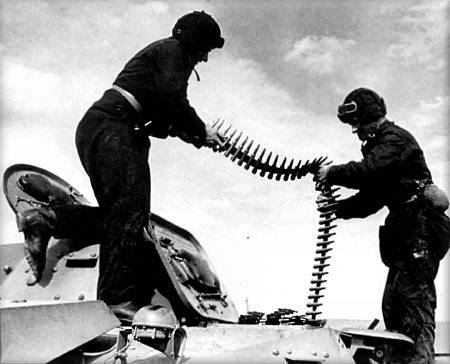
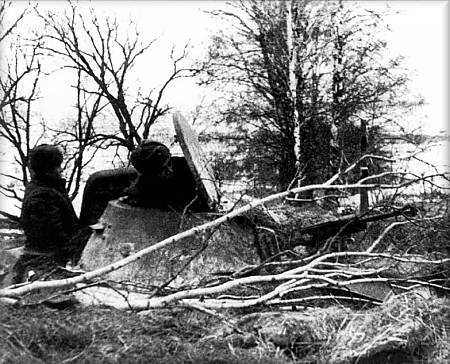
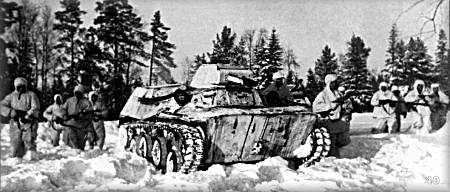
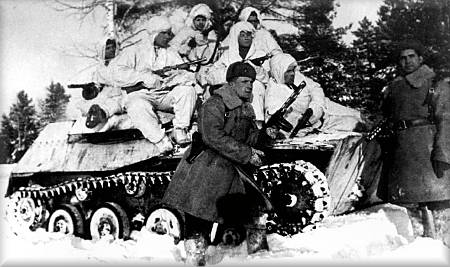
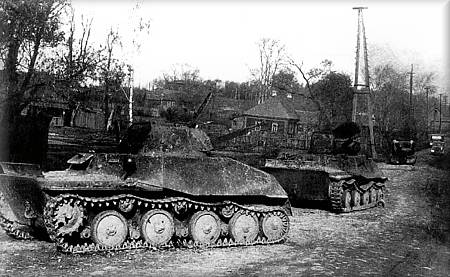
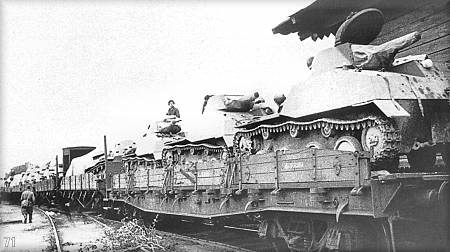
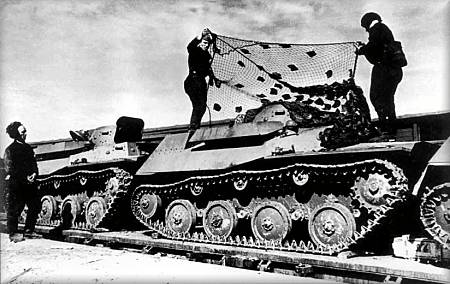
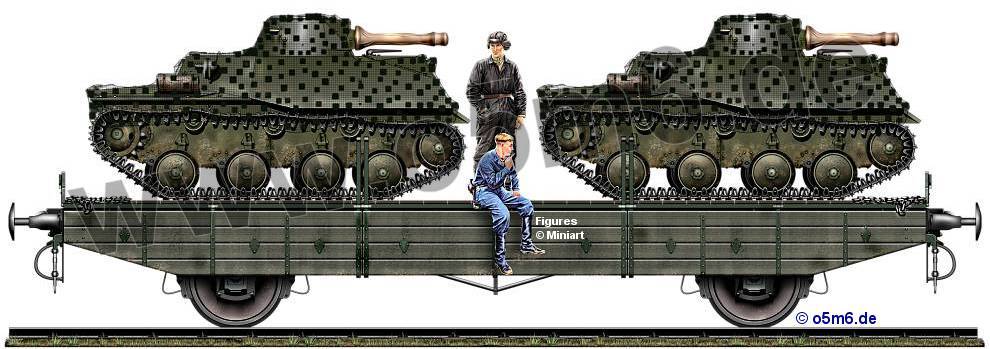
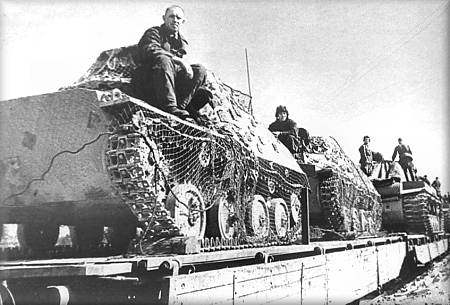
In the battles in which the T40's were first used, Soviet commanders tried to use the T-40's as regular tanks (like the T-26, BT's and so on). T-40's were never used in their intended reconnaissance role but were used for other, unintended tasks. Most of them were lost in battle without distinguishing themselves. The T-40 was used the most during the Moscow battles (winter 1941-1942). However, some of them took part from the beginning of the Great Patriotic war. They were very successful in marshes where heavier tanks couldn't pass. T-40 light tanks were used in tank brigades of mixed composition. For example, in the 8th Tank Brigade (commanded by Colonel P.A.Rotmistrov, and formed in August-September 1941), there were 61 tanks which included seven KV-1's, 22 T-34-76's and 32 T-40's.
By mid 1941, the T-40 almost disappeared from the battlefields. However, during later crossings of large rivers (like the Dnieper, Dnestr and others) these tanks provided invaluable service to the Red Army. That's why the Red Army's entire complement of T-38's were concentrated for the crossing of the Svir' River. By 1946, T-40's were relegated to use as training vehicles.
Source : The Russian Battlefield.
No publication in any form without the author's written permission.
Last Updated: June 14, 2008