
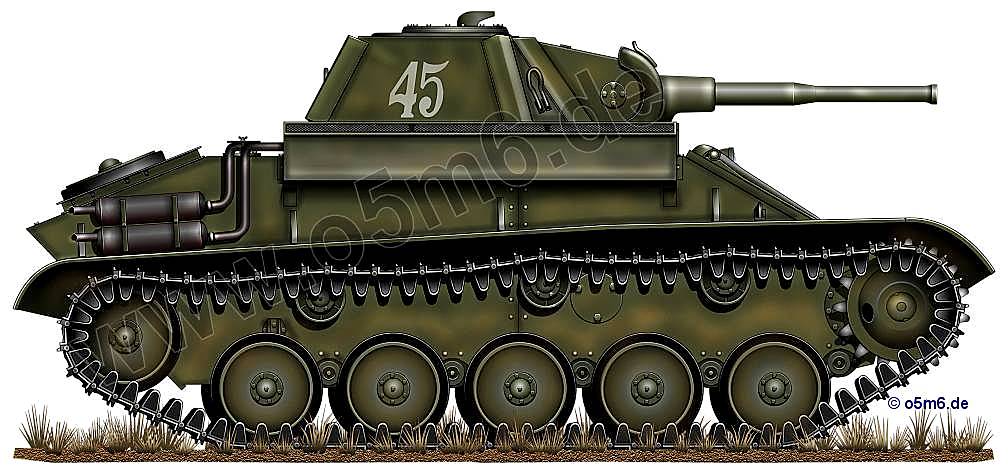

It had been kept in production so long only because of the desperate need of tanks to fill out depleted tank units and because of the fact that it could be produced at small factories without facilities for handling larger tanks like the T-34.
Work on the T-70 by N. Astrov's Zavod No 38 design team in Kirov began towards the end of 1941.
The basic aim was to increase the frontal armour up to 45mm in order to protect the tank from 37mm guns, and to increase the main gun at least to a 45mm gun so as to give the crew a slight chance if enemy tanks were encountered.
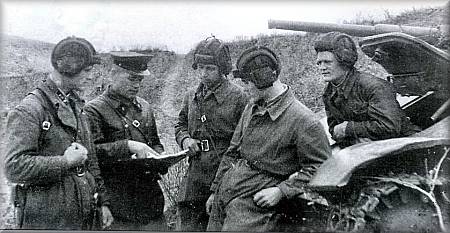
As debilitating as was the two-man crew on the T-34, the one-man crew on the T-60 and T-70 light tanks made platoon co-ordination virtually impossible to all but the most skilled; however, this feature went unchanged.
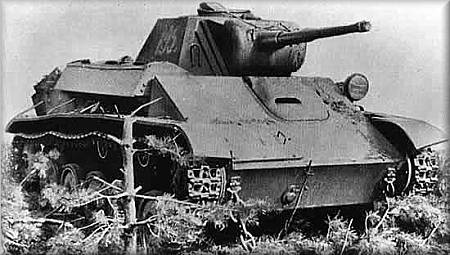
Like that of the T-60, the hull of the new T-70 was kept simple for ease of manufacture.
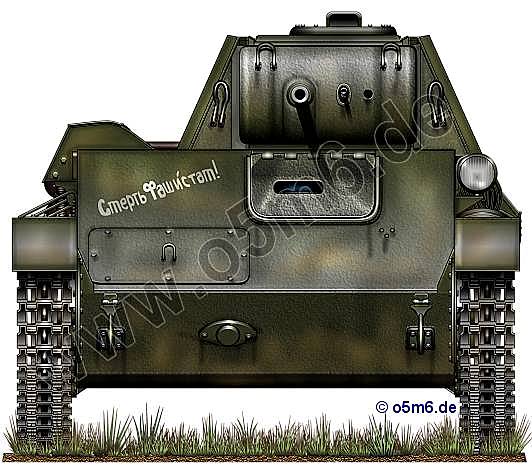
A small number of T-70 were produced in the heat of the moment, but even before they could be issued, it was evident that the powertrain layout was completely unacceptable; this fact, however, didn't prevent the first SU-76 batches to be based on that ill-fated chassis !
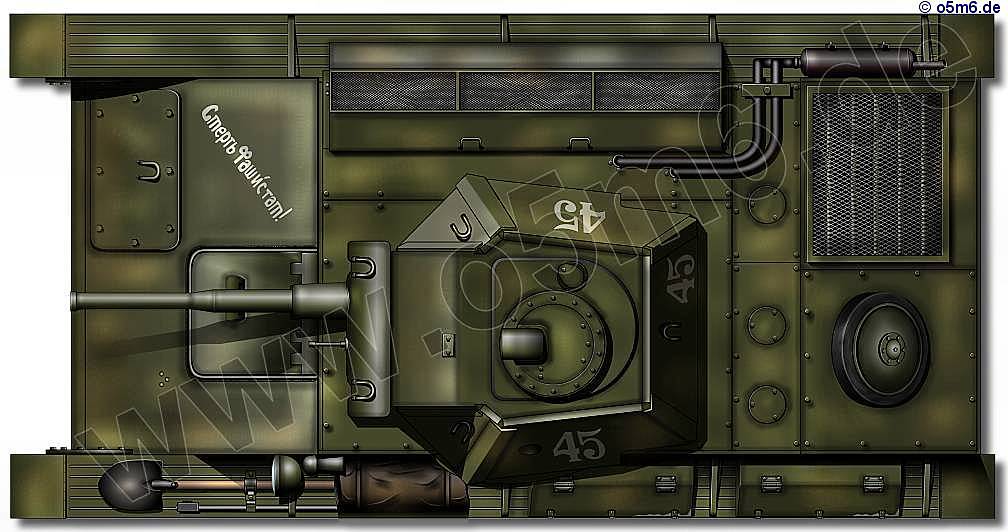
The Astrov team redesigned it by placing the two engines in a row and using a conventional transmission and differential arrangement.
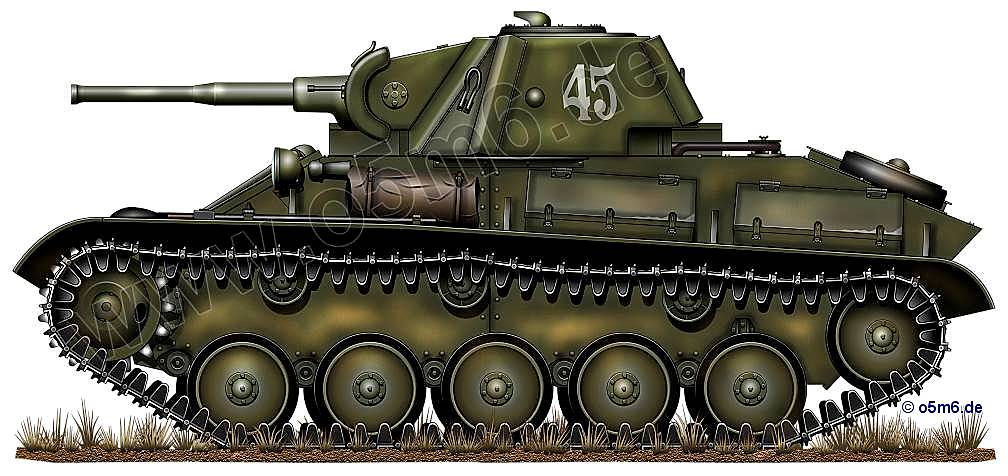
To ease assembly, the turret was also redesigned to use flat armour plate, and it was moved to the left, with the engines to the right.
The T-70M (»modified«), as it was called, was accepted by the GKO for Red Army service in March 1942.
T-70 production took place at Zavod No 37 in Sverdlovsk and alongside T-60 production at the Gokiy auto Zavod (»GAZ«) and Zavod No 38 in Kirov.
It completely supplanted the T-60 in September 1942. With 4883 machines produced in 1942, it was the second numerous tank type only surpassed by the T-34 production numbers of that year.
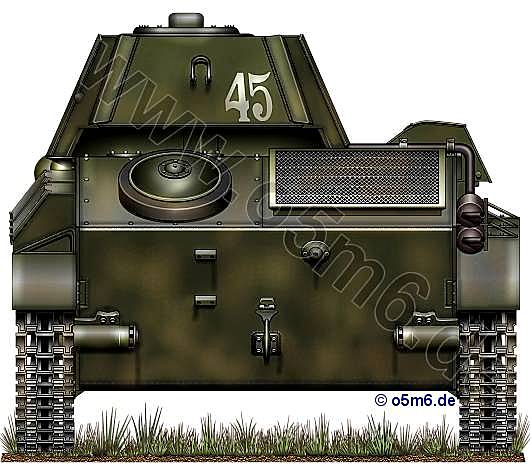
The final production series used the more powerful GAZ-203 engine and had other hull improvements such as a traversable MK-4 periscope for the driver in place of a simple view-slit.
In service, the T-70 proved competent but unexceptional.
The resources devoted to it could be better spent on manufacturing the SU-76 which used the same components but had heavier firepower.
Moreover, by this time, adequate numbers of Lend-Lease light tanks like the Valentine had become available for use in roles earlier satisfied by the domestic light tanks.
Source : S.Zaloga, J.Grandsen, »Soviet Tanks and Combat Vehicles of World War Two«.
Note
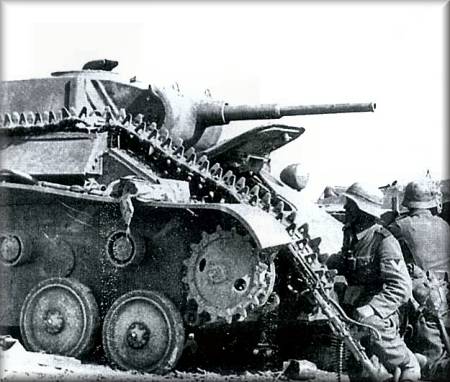
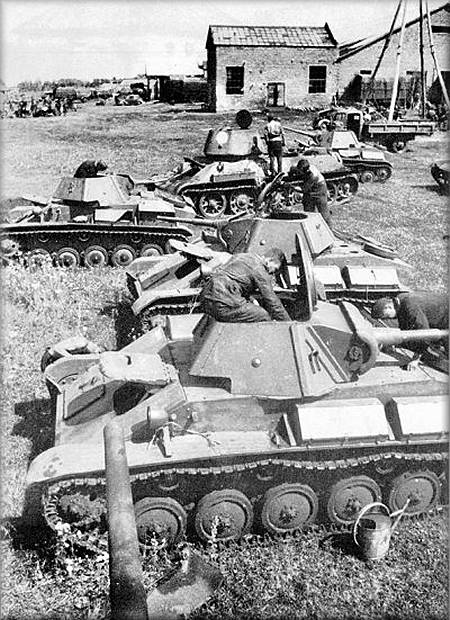
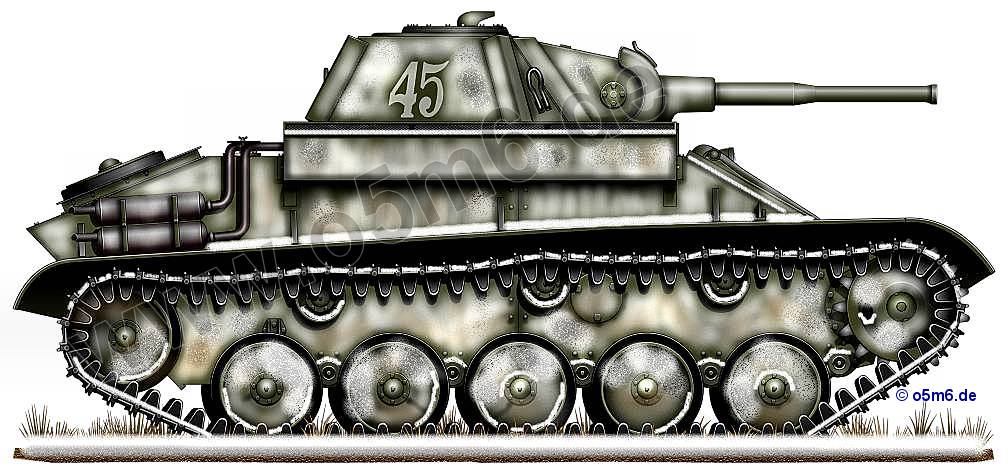
The main characteristics of the early production series are the round front fenders, the non-traversable early turret hatch periscope and finally the simple vision slot in the driver hatch. More often then not, white asbestos could be found wrapped around the exhaust tubes.

No publication in any form without the author's written permission.
Last Updated: May 29, 2007